Top Tips for Shooting with a Pinhole Camera

For people who are curious, creative, and not expecting perfection…
Thinking About Shooting Pinhole? Read This First.
Pinhole photography is beautifully simple — but that doesn’t mean it’s easy. If you’re thinking about getting a pinhole camera, or you’ve got one and don’t really know what to do with it yet, these tips are for you.
They’re based on things I wish I’d known earlier, mistakes I’ve made (sometimes more than once), and tricks I’ve picked up along the way. If they help you take a few good shots and have fun doing it, then I’m delighted for you.
All the photos in this post come from the Reality So Subtle 6x9F and are based on my experience with this camera. I’ve also shot pinhole with a half-frame camera, and for me, medium format hits the sweet spot as it captures incredible detail, while still retaining that dreamy pinhole look. The Reality So Subtle 6x9F possibly has the most extreme wide angle at 11mm, but that’s part of the reason I chose it. Other brands like the Zero and the Ondu have less extreme focal lengths if you prefer that.
01.
Use a tripod (or get creative)
You really do need a tripod — even for 1-second exposures. If you don’t have one, get creative: rest your camera on a wall, bench, backpack, jumper, even a shoe. Anything stable works.

02.
Meter your light
You’ve got options:
- A small external meter like the KEKS or Reveni ones, which you can put on your hotshoe if you have one
- A traditional light meter like the classic Sekonic 308
- Use the Pinhole Assist iOS app, which I use, and which I find really excellent.
If you’re doing long exposures, pair Pinhole Assist or your manual exposure reading with the Reciprocity Timer app, to check if your film needs even more time. The app also includes a stopwatch so you don’t need a separate one. Easy!

03.
Don’t block the shot with your hand
If your camera is wide-angle — my Reality So Subtle 6x9F’s angle is 11mm — it sees everything. It’s easy to get your fingers in the frame without realising. Be aware of how you’re holding the camera, especially when setting up a shot low to the ground or against a wall. In my case I was trying to balance my camera on my backpack as Horizon 22 in London wouldn’t let me take in a tripod, and I was worried about it falling. Someone later pointed out it looked like a giant hand was about to pick up a person—which is cool, but it wasn’t my intention!

04.
Learn to love the light
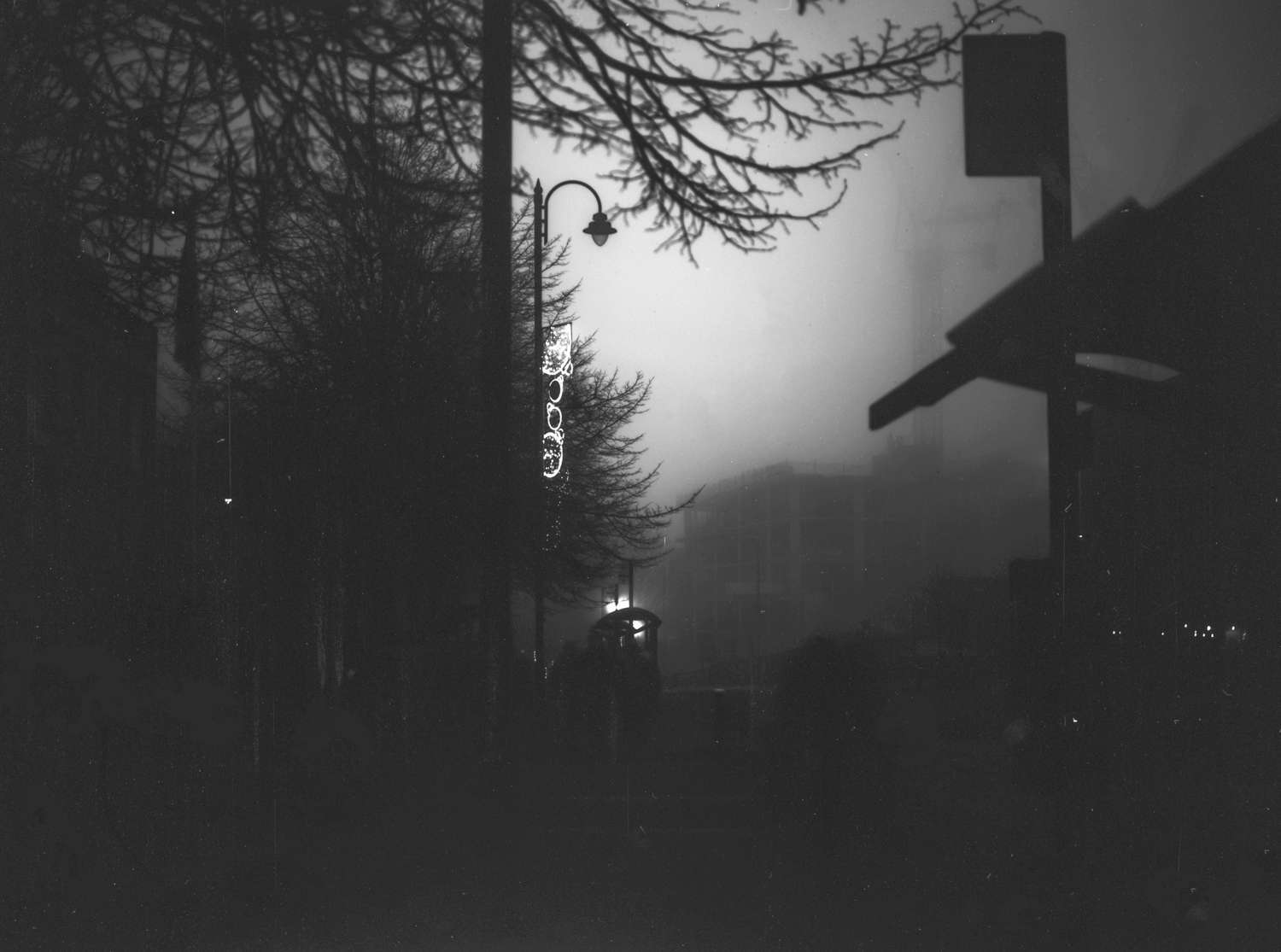
Pinhole cameras love bright conditions. Bright overcast is ideal, midday sun is even better. Low light = long exposures and rock-steady setups. Indoors or at dusk? Be prepared for a tripod session and a very long wait. This is probably what I love most about my pinhole camera—even when the light looks harsh or uninspiring, there’s something other-worldly and muted about the final images.

05.
Bracket short exposures if the shot matters
If your exposure is under 10–15 seconds and you really care about getting the shot, try bracketing. One a bit shorter, one longer. But once you’re into really long-exposure territory, it makes less of a difference. I found I only really need to reshoot if I’d bumped or moved the camera, or if I really wasn’t certain the framing was right (did I mention there’s no viewfinder?)

06.
Plan your composition – and get closer
Pinhole is wide. Really wide. Even if you think you’re close to your subject, get closer. Fill the foreground with texture or structure. It adds depth and interest. Even when I felt I was really close, I was surprised at how far away and insignificant they seemed in the shot. In this shot of the graveyard, I was less than about 30cm from the gravestone!

07.
Use your phone to frame – or use an external viewer
I had frames at the top of my Reality So Subtle 6x9F camera which give a rough idea of what will be in the frame. There’s no viewfinder, so you really are in the dark on what will be in the final shot! I discovered that putting my iPhone 15 on 0.5 was almost the same focal length as the camera, and taking a shot from in front of the pinhole gave me a pretty good idea of if I’d got the tilt and angle correct for my shot.


08.
Embrace the blur
Pinhole photography isn’t about sharpness. It’s soft, glowy, sometimes weird — and that’s the point. Moving people disappear. Water goes silky. The unexpected is part of the joy. This photo has a scratch, and possibly even a touch of double exposure or fogging, but that’s the way it is with pinhole…
09.
Use your finger (or black card) to start and stop exposures
You’ll need to find what works for you—but with the Reality So Subtle 6x9F pinhole, I use my finger over the pinhole to stop the light rather than moving the pinhole cap—it’s a more reliable way of avoiding camera shake. Some people might prefer black card or to use a lens cap.

10.
Keep notes and take smartphone shots as well
I like to take aa quick shot of the scene and my setup if applicable. It helps me learn framing, remember what I shot, and makes sharing details or note-taking easier later.
Exposure time, light, metering method, film stock — write it down. It’s especially useful when trying a new camera or film. Over time, it makes you faster and more intuitive. I love these dinky little Photomemo books from Analogue Wonderland; some people prefer to use Notes in their smartphone.

11.
Create a system—and stick to it!
Everything in pinhole is manual. That’s the charm — and the challenge. Get into a rhythm that works for you:
- Wind on: either right after the shot or just before the next one — but don’t mix it up. Otherwise you’ll get blank frames (painful with a Reality So Subtle 6x9F!) or unintentional double exposures.
- Notes: pick one place to jot things down (phone, notebook, back of your hand…)
- Film: tape the end of your film box onto the back of your camera so you don’t forget your ISO halfway through.
The more consistent you are, the fewer frustrating surprises you’ll get when that roll comes back.

12.
Use a lens cap if you’ve got a filter holder
I’m really lucky that I have a filter thread on my Reality So Subtle camera—so I bought a cheap lens cap to fit on it. Why? Well, my camera moved in my bag, and the shutter knob slid open, which meant my shot got exposed by accident (an expensive mistake when it’s 6×9, as you only get 8 shots anyway). I put the cap on when I’m not shooting, so I can be sure I don’t ruin a shot by accident.

13.
Be careful when removing your film
Pinhole cameras don’t always keep tension well, especially if like me, it’s taken a while to get used to winding on correctly. My Reality So Subtle 6x9F camera can be a bit temperamental with tension, and I often end up with very loose rolls. I fashioned black 120 canister out of x2 35mm canisters and I put my film in this, inside the dark bag, and give Analogue Wonderland instructions to open the canister in the darkroom to avoid serious light leaks.
Wind carefully, and if possible, remove in a dark bag. It’s easy to unravel your whole roll in two seconds flat. You can buy film changing bags from labs like Analogue Wonderland. It’s useful to have one of these even if you don’t develop your own film.

14.
Embrace low ISO film—try different films and see what you love
Start with slower films (ISO 50–160) to embrace longer exposures. You may notice that colours are softer and more muted than when shot in regular 35mm or 120 cameras.
Some great ones to try:
- Kodak Ektar 100 – punchy and fine-grained colour film
- Portra 160 – forgiving and soft colours
- Ilford FP4 / TMax 100 – crisp and classic black and white film
- Cinestill 50D – dreamy and cinematic colour film
- Fuji Neopan Acros II – fine-grained black and white—great for long exposures.
- Lomo Metropolis or Turquoise for creative play.
Anything goes. I love using expired film with my pinhole camera. It’s all part of the fun.
 Reality So Subtle 6x9F, HP5 Plus


 Reality So Subtle, Portra 160 expired

 Reality So Subtle 6x9F, HP5 Plus (expired)


 Reality So Subtle 6x9F, Portra 160 (expired)
 Reality So Subtle 6x9F, HP5 Plus

 Reality So Subtle 6x9F, Portra 160 (expired)
 Reality So Subtle 6x9F, HP5 Plus


 Reality so Subtle 6x9F, Ilford Delta 100
Let go of the results…
Pinhole photography is all about process. Not every shot will work — and that’s OK. The blur, the weirdness, the wonkiness — that’s where the magic lives. Don’t wait to be perfect. Just start.
ANALOGUE WOnDERLAND
Analogue Wonderland are a UK-based lab that offer a wide variety of cameras, including pinhole, and an extremely wide variety of film stocks.
Check out their developing services for black and white and colour films.


Come shoot with me!
I host relaxed, film-only photowalks (including pinhole-focused ones!) in Kent, London, and around the UK, often with other film ambassadors, or with Analogue Wonderland and other photographers.
Follow me on Instagram @lightninginabottleuk or check photowalk.me to see what’s coming up — and join us for a creative, low-pressure day out. I occasionally offer workshops as well—get in touch if you’re interested in anything in particular.
Why not send me a quick WHATSAPP?
Want to improve your analogue photography? Whether you need guidance on film or camera choices, or want to improve your photography, feel free to reach out and book a mentorship session.